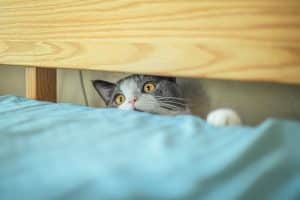
Bonfire Night is just around the corner, and whilst we might enjoy the spectacular displays, our feline friends often have a very different experience. If you’ve ever seen your cat bolt under the bed at the first bang, you’ll know just how distressing fireworks can be for them.
The good news? With some preparation and know-how, you can help your cat feel safe and secure during fireworks season. Whether your cat gets mildly unsettled or absolutely terrified by the noise, this guide will give you practical strategies to keep them calm.
Let’s explore why cats are so affected by fireworks, and more importantly, what you can do to help your beloved companion through this challenging time.

Why cats are so scared of fireworks
Understanding why your cat reacts so strongly to fireworks helps you respond with the right support.
Super-Sensitive Hearing
Cats have extraordinary hearing – they can detect frequencies up to 64,000 Hz, compared to our measly 20,000 Hz. What sounds loud to us is absolutely thunderous to them. The sudden bangs, whistles, and crackles of fireworks are genuinely painful and frightening to cats’ sensitive ears.
Cats’ acute hearing means they experience fireworks as unexpectedly loud, unpredictable noises that trigger their natural fear response.
Unpredictability Creates Anxiety
Cats are creatures of routine who like to feel in control of their environment. Fireworks are chaotic – they come without warning, from different directions, at varying volumes and frequencies. Your cat can’t predict when the next bang will happen, which creates sustained stress and hyper vigilance.
This unpredictability is often worse than the noise itself. Your cat remains on high alert, unable to relax even during quiet moments.
Natural Survival Instincts
In the wild, loud noises often signal danger – think thunder, predators, or environmental threats. Your cat’s instinct is to hide and stay very still until the perceived threat passes. Even though they’re safe in your home, their ancient survival programming kicks in automatically.
Some cats will hide for hours, even after the fireworks have stopped, because their stress hormones take time to return to normal levels.
Signs your cat is stressed by fireworks
Not all cats show fear in obvious ways. Knowing the signs helps you respond appropriately and provide comfort when they need it most.
Clear Fear Responses
The classic signs are hard to miss – your cat might run and hide under beds or in wardrobes, their pupils may be fully dilated, and their ears flat against their head. Some cats will tremble or pace anxiously, unable to settle.
You might notice excessive meowing or yowling, particularly in cats who are usually quiet. This vocalisation is their way of expressing distress.
Subtle Stress Indicators
Some cats show stress more quietly. They might refuse food, even their favourite treats. Others become excessively clingy, following you everywhere and demanding constant attention. Conversely, some cats become withdrawn and unresponsive.
Watch for changes in grooming behaviour too. Stressed cats might over-groom certain areas or completely stop grooming. Both extremes indicate they’re struggling.
Physical Stress Symptoms
Stress can manifest physically. Your cat might have loose stools or refuse to use their litter tray. Some cats drool when extremely anxious, whilst others shed excessively.
In severe cases, stressed cats may lose bladder control or experience stress-induced cystitis. If your cat shows any concerning physical symptoms, consult your vet.

Preparing Your Home Before Fireworks Start
The best defence against fireworks stress is preparation. Creating a safe environment before the bangs begin makes a huge difference.
Create a Safe Room
Choose a quiet room away from windows, ideally in the centre of your home where external noise is most muffled. This becomes your cat’s refuge during fireworks.
Set up everything your cat needs in this room – litter tray, food, water, comfortable bedding, and familiar toys. Make sure there are hiding spots like cardboard boxes, pet carriers with the door open, or space under furniture.
The key is giving your cat choices. Some cats prefer to hide in enclosed spaces, whilst others feel safer being able to see what’s happening. Provide both options.
Block Out Sights and Sounds
Close curtains and blinds well before dark to muffle sound and block the bright flashes that can be just as frightening as the noise. Heavy curtains work better than thin ones.
Play calming music or leave the television on at a normal volume. This creates familiar background noise that helps mask the unpredictable bangs outside. Classical music or specially designed pet relaxation music works particularly well.
Some people find that white noise machines or fans provide helpful ambient sound that makes fireworks less startling.
Make It Cosy and Familiar
Bring in items that smell like you – a worn t-shirt or blanket from your bed. Your scent is comforting and reassuring to your cat.
Don’t wash their bedding right before Bonfire Night. Familiar smells help cats feel secure, and freshly laundered items have lost those comforting scent markers.
Consider using synthetic pheromone diffusers like Feliway in the safe room. These products mimic natural cat pheromones and can help reduce anxiety. Buy these in advance (at least 7 days before Bonfire Night) for them to be in full effect. Here’s a link for Feliway on Amazon.
We're here for you and your cat
Special Offer for New Customers. Receive 2 FREE visits when you book your first cat sitting visits with us! Experience the peace of mind that comes with professional, loving cat care.
What to do during fireworks
When the fireworks start, your response can significantly affect how your cat copes.
Stay Calm and Act Normal
Cats are incredibly perceptive and pick up on our emotions. If you’re anxious or behave differently, your cat will sense something’s wrong and become more stressed.
Carry on with your normal routine as much as possible. If you usually watch television in the evening, do that. Your calm demeanour reassures your cat that everything’s actually fine, despite the noise.
Let Your Cat Hide
Never force your cat out of their hiding spot, even if you want to comfort them. Hiding is a natural coping mechanism, and pulling them out increases their stress.
If your cat wants to hide under your bed or in a wardrobe, let them. Make sure they can access their safe room if they choose to, but don’t force them to stay there.
Provide Comfort on Their Terms
Some cats seek comfort and want to be close to you during fireworks. If your cat comes to you, offer gentle reassurance – calm strokes and a soothing voice can help.
However, don’t overwhelm them with attention if they prefer space. Let your cat dictate the level of interaction they need.
Keep Cats Indoors
This seems obvious, but it’s crucial – keep your cat inside from dusk onwards during Bonfire Night. Even cats who usually have outdoor access should stay in.
Make sure all windows and cat flaps are secured. A terrified cat may try to bolt through any opening, and cats have been known to get lost or injured trying to escape fireworks.
Check that your cat is microchipped and your contact details are up to date, just in case they do somehow get out.
Long-term support for anxious cats
If your cat is particularly sensitive to fireworks, consider these approaches for next year.
Desensitisation Training
Desensitisation involves gradually exposing your cat to recorded firework sounds at very low volumes, paired with positive experiences like treats and play. Over weeks or months, you slowly increase the volume.
This isn’t a quick fix – it requires patience and consistency – but it can significantly reduce fear responses. Start this training well before fireworks season, ideally in the spring or summer.
Veterinary Interventions
For cats with severe firework phobia, speak to your vet well before Bonfire Night. They may recommend anti-anxiety medications or calming supplements that can help.
Your vet can advise on the best option for your cat’s specific needs.
Professional Cat Sitting During Fireworks
If you’re away during fireworks season, having a professional cat sitter provides invaluable support. An experienced sitter can monitor your cat, ensure they’re safe, and provide comfort during the stressful period.
We understand the specific needs of anxious cats and can implement your cat’s firework routine, ensuring they’re never alone during the worst of the displays.

What not to do during fireworks
Well-meaning actions can sometimes make things worse for your cat scared of fireworks.
Don't Punish Fear Responses
Never tell off your cat for being scared or for stress-related behaviours like toileting outside the litter tray. They’re not being naughty – they’re genuinely terrified and can’t help their response.
Punishment will only increase their anxiety and reduce your bond of trust.
Don't Force Interaction
Picking up a frightened cat or pulling them from their hiding spot can create more stress. Respect their need for space and allow them to cope in their own way.
Even if you desperately want to comfort them, forcing interaction when they’re not receptive will have the opposite effect of our intention.
Don't Leave Windows or Doors Open
It might seem obvious, but in the stress of preparing for Bonfire Night, it’s easy to forget. A terrified cat can squeeze through surprisingly small gaps, and may seriously injure themselves trying to escape.
Double-check all potential exits, including windows and cat flaps.
Supporting multiple cats during fireworks
If you have more than one cat, their responses to fireworks might differ dramatically.
Different Cats, Different Needs
One cat might hide under the bed whilst another seems completely unbothered. Some cats become more clingy with each other during stress, whilst others prefer to be alone.
Provide multiple safe spaces so each cat can choose their preferred coping spot. Don’t force cats to share hiding places if they’d rather be apart.
Watch for Tension
Stress can temporarily change cat relationships. A normally calm cat might become irritable and snap at housemates. Monitor their interactions and separate them if needed.
Ensure there are multiple resources – several litter trays, water bowls, and hiding spots – so cats don’t have to compete or encounter each other when stressed.
Conclusion
Bonfire Night doesn’t have to be traumatic for your cat. With thoughtful preparation, a safe environment, and calm support during the fireworks, you can significantly reduce their stress and help them feel secure.
Remember that every cat is different – what works brilliantly for one might not suit another. Pay attention to your cat’s individual responses and adjust your approach accordingly. The key is providing options and letting your cat choose what makes them feel safest.
If your cat struggles particularly badly with fireworks, don’t hesitate to consult your vet about additional support options.
There’s no shame in seeking help – you’re being a responsible, caring cat owner by acknowledging when your cat needs extra assistance.
Need support for your cat during Bonfire Night?
If you’re away during Bonfire Night or the surrounding weeks, our experienced cat sitters can provide the calm, reassuring presence your cat needs. We’ll follow your cat’s routine and ensure they’re never alone during the frightening displays.